

A $350–$600 Level 2 charger bolted to your garage wall feels like a simple upgrade. Then a Front Range hailstorm knocks out power, a surge fries the unit, and your adjuster asks whether a licensed electrician installed it and whether the panel work was permitted. Suddenly the details matter a lot.
Most people install a home charger, plug in their EV, and never call their insurance agent. That's understandable, since nobody tells you to. But a charger touches three policies at once: your homeowners coverage, your liability protection, and your auto policy. Gaps tend to form exactly where those policies meet.
This guide covers home EV charger insurance from the ground up: electrical upgrades, equipment damage, liability, and how your home and auto coverage work together. It's written for Colorado homeowners and drivers, though most of it applies anywhere. If you're in Denver, Fort Collins, or a mountain town where
winter storms and lightning are part of life, the stakes run a little higher. Here's what to check before something goes wrong.
Understanding Home EV Charger Insurance Coverage
There's no standalone "charger policy" for most homeowners. Your charger gets covered, or doesn't, based on how your existing homeowners policy classifies it. That classification decides which limit applies, which deductible kicks in, and whether you get replacement cost or a depreciated payout.
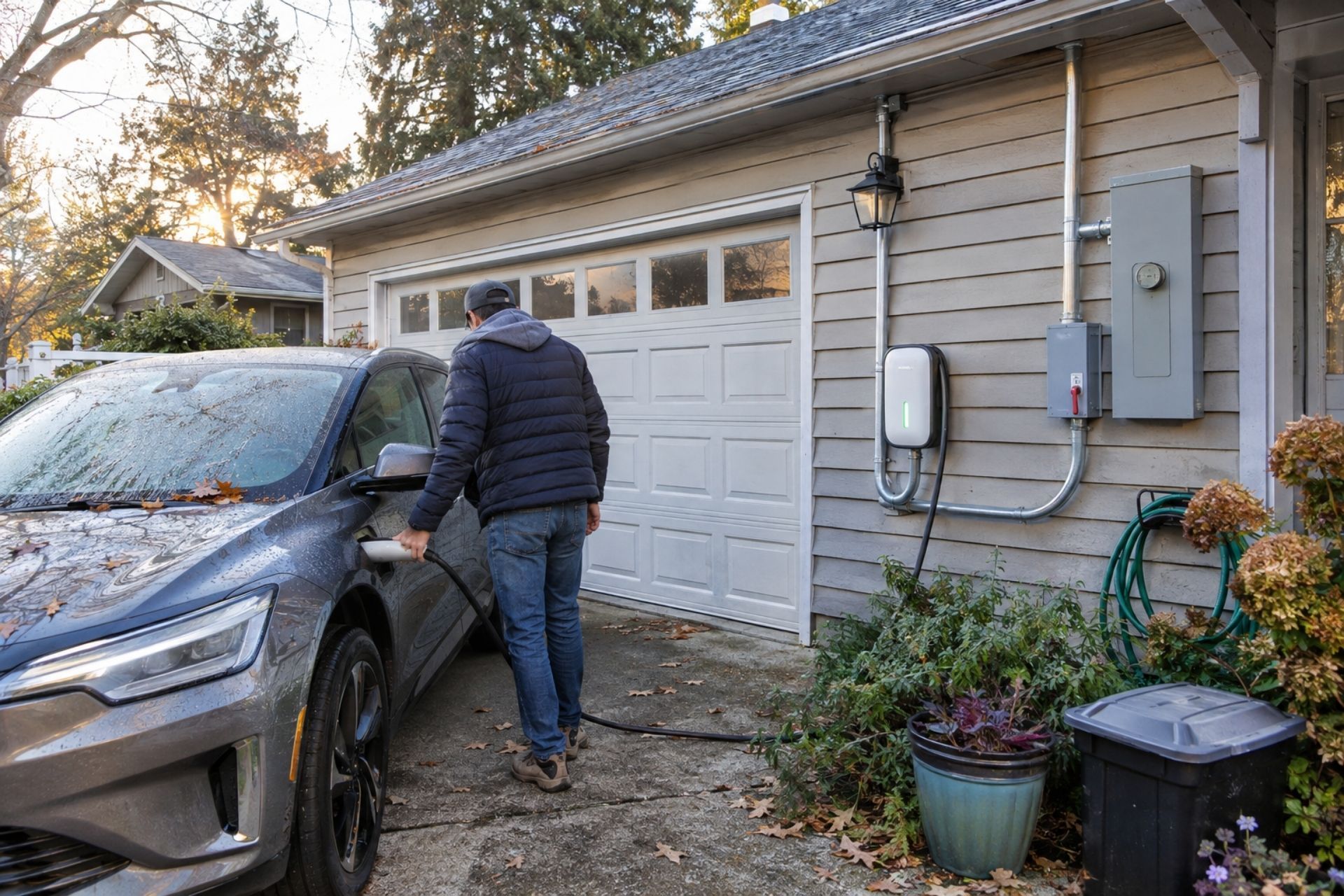
The key distinction is hardwired versus portable. Hardwired Level 2 chargers are generally treated as permanent fixtures under Dwelling coverage (Coverage A), the same bucket as your furnace or built-in cabinets. Portable charging cables that you unplug and toss in the trunk fall under Personal Property (Coverage C) instead.
Why does this matter in practice? Coverage C often has its own limits and may pay actual cash value unless you've bought replacement cost on contents. A Coverage A claim usually rides on your dwelling limit, which is typically much larger. If your cable gets stolen from your car at a trailhead, that's a different conversation than a hardwired unit damaged in a garage fire.
One common mistake we see: people assume "it's attached to the house, so it's covered." Usually true, but only for covered perils. Wear and tear, manufacturer defects, and gradual electrical deterioration are standard exclusions. Your policy covers sudden, accidental damage, not a charger that simply stops working after four years.

By: Brian J. Cook
Founder & Managing Partner of The Insurance Loft
Insuring Electrical Upgrades and Infrastructure
The charger itself is often the cheapest part of the project. The wiring, breaker, conduit, and sometimes a whole new panel make up the real investment, and they all become part of your home's structure once installed.
Panel Upgrades and Dedicated Circuits
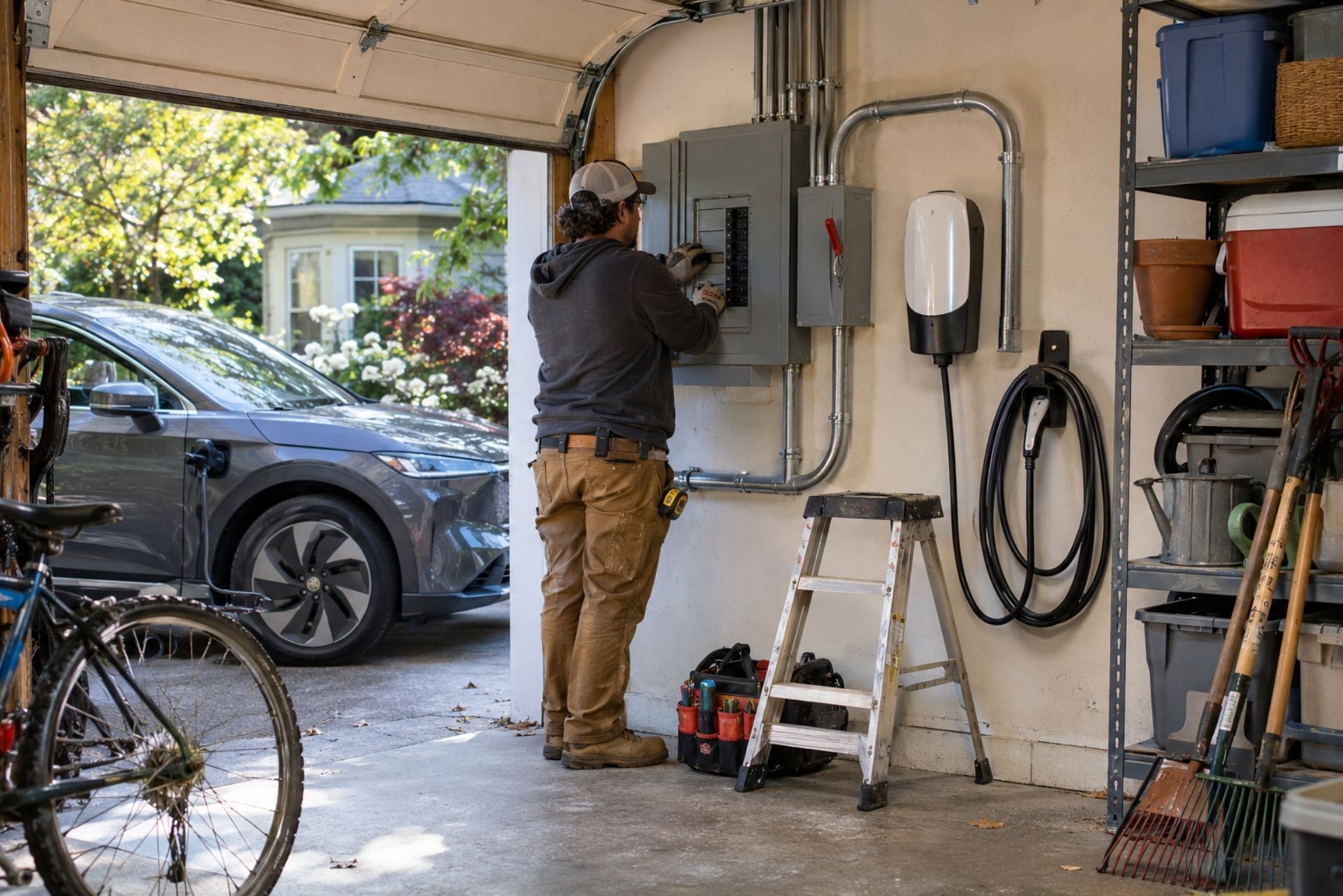
A Level 2 charger needs a dedicated 240-volt circuit, and many older Colorado homes, especially 1960s and 1970s ranches around Lakewood and Aurora, simply don't have the panel capacity. Some insurers may require a professional load assessment under NEC 220.82 and a panel upgrade to 200A or 400A service before they'll cover a home with a Level 2 charger. Not every carrier asks, but the ones that do will want paperwork.
Once you upgrade, your home's rebuild cost goes up. A new panel, heavier service entrance cable, and a dedicated circuit add real dollars to what it would cost to reconstruct your house after a total loss. If your Coverage A limit hasn't been adjusted, you could end up underinsured. Call your agent after any major electrical project and ask them to rerun your replacement cost estimate.
Surge protection deserves attention too. The 2026 NEC (Sections 230.67 and 215.18) treats whole-home surge protection as a baseline safety requirement for residential services. Beyond code compliance, a surge protector is the cheapest insurance against lightning damage to a charger worth well over a thousand dollars.
Permits and Professional Installation Requirements
This is where claims get denied. The 2026 NEC language called for permanently installed EV power transfer equipment to be installed by a "qualified person," typically a licensed electrician. But the rules shifted mid-year: as of September 2026, the Section 625.4 "qualified person" revision was struck down, leaving local jurisdictions to define who counts as qualified.
For Colorado homeowners, that means your city or county building department sets the standard. Denver, Boulder, and Colorado Springs each have their own permitting processes. Regardless of what the code technically allows, insurers care about one thing: did a licensed professional do the work under a permit?
Here's my blunt advice. Skip DIY hardwiring even if your jurisdiction permits it. If a fire starts at an unpermitted connection, expect an investigator to dig into exactly who did the work. Keep these documents in a folder:
- The electrical permit and final inspection sign-off
- Your electrician's license number and invoice
- The charger's model, serial number, and purchase receipt
- Photos of the installation before drywall or conduit covers were added
Protection Against Equipment Damage and Thef
Most charger damage claims fall into a handful of buckets. Knowing which ones your policy covers saves you a frustrating call later.
Covered perils on a typical HO-3 policy usually include fire, lightning, windstorm, hail, theft, vandalism, and falling objects. An outdoor-mounted charger on the side of a garage in Castle Rock that takes a direct hit from golf-ball hail? Generally covered, minus your deductible. That deductible is the catch. Many Colorado homeowners now carry percentage-based wind and hail deductibles, often 1% or 2% of dwelling coverage. On a $600,000 home, a 2% deductible means $12,000 out of pocket before coverage pays anything, which makes a single charger claim pointless.
Power surges are trickier. Surges from lightning are usually covered. Surges from utility-side problems or internal electrical faults may fall under an exclusion unless you've added equipment breakdown coverage. That endorsement is inexpensive with many carriers and covers mechanical and electrical failure of home systems, often including chargers.
Theft varies by setup:
- Hardwired garage unit stolen: Typically a Coverage A claim
- Portable cable stolen from your driveway: Coverage C, subject to your contents deductible
- Cable stolen from your car at a public lot: Often still Coverage C under your homeowners policy, not auto
- Charger damaged by your own car backing into it: Possibly a collision claim under auto, depending on the carrier
Before filing any small claim, compare the repair cost to your deductible and consider how a claim might affect your next renewal.
Managing Liability Risks for Home Chargin
Equipment damage hurts your wallet. Liability claims can hurt it much worse. Your homeowners liability coverage (Coverage E) protects you when someone else gets hurt or their property gets damaged because of something on your premises, and a charger introduces new ways that can happen.
Fire Risk and Property Damage Liability
EV charging fires are rare, but when they happen in a garage attached to a townhome or duplex, the damage rarely stays on your side of the wall. If an improperly installed circuit starts a fire that spreads to your neighbor's unit in a Stapleton row home, their insurer may pay their claim and then pursue you through subrogation.
That's where your liability limit gets tested. Many policies default to $300,000, which can disappear quickly when a fire damages a neighboring home and displaces a family for months. Bumping to $500,000 usually costs less than $50–$100 per year, and a personal umbrella policy adds a million or more on top. For anyone charging in a shared-wall property, I'd consider an umbrella close to mandatory.
HOA rules add another layer. In California,
SB 770 removed the requirement for homeowners to name their HOA as an additional insured on liability policies for EV chargers, effective January 1, 2026. Colorado hasn't adopted that same rule, so read your HOA's charging policy carefully. Some associations still require proof of liability coverage or additional insured status before approving an installation.
Trip Hazards and Public Access Concerns
A charging cable stretched across a driveway or sidewalk is a classic trip-and-fall setup. If a mail carrier, neighbor, or delivery driver catches a foot on your cord and breaks a wrist, that's a bodily injury liability claim against your homeowners policy.
The risk climbs if you let guests or neighbors use your charger, and it changes completely if you charge them money. Renting your charger through a sharing app can push the activity into "business pursuits," which standard homeowners policies typically exclude. If you're thinking about earning a few bucks from your charger, talk to your agent first. Otherwise, mount the unit where the cable never crosses a walkway and use a cable retractor or wall hook.
Coordinating Home and Auto Insurance Policies
Your charger lives on your house, but it exists to serve your car. That overlap creates confusion, and confusion creates gaps. Good coordination between home and auto policies means knowing ahead of time which policy responds to which kind of loss.
Insurers are still catching up on EVs generally. As one industry observer put it, "the data accumulation is still light compared to gas-powered vehicles", so carriers sometimes take a conservative approach to pricing and coverage. That conservatism can show up as stricter claim reviews when a loss touches both a home and an EV.
Having both policies with the same carrier helps in a messy claim. When one company handles your home and auto, there's no finger-pointing between two adjusters over who pays for a charger fire that also damaged the car. Bundling usually earns a discount too, though that varies widely by carrier.
Where Home Coverage Ends and Auto Begins
The general rule: the charger and the house belong to homeowners coverage, and the vehicle belongs to auto coverage. In practice, it breaks down like this:
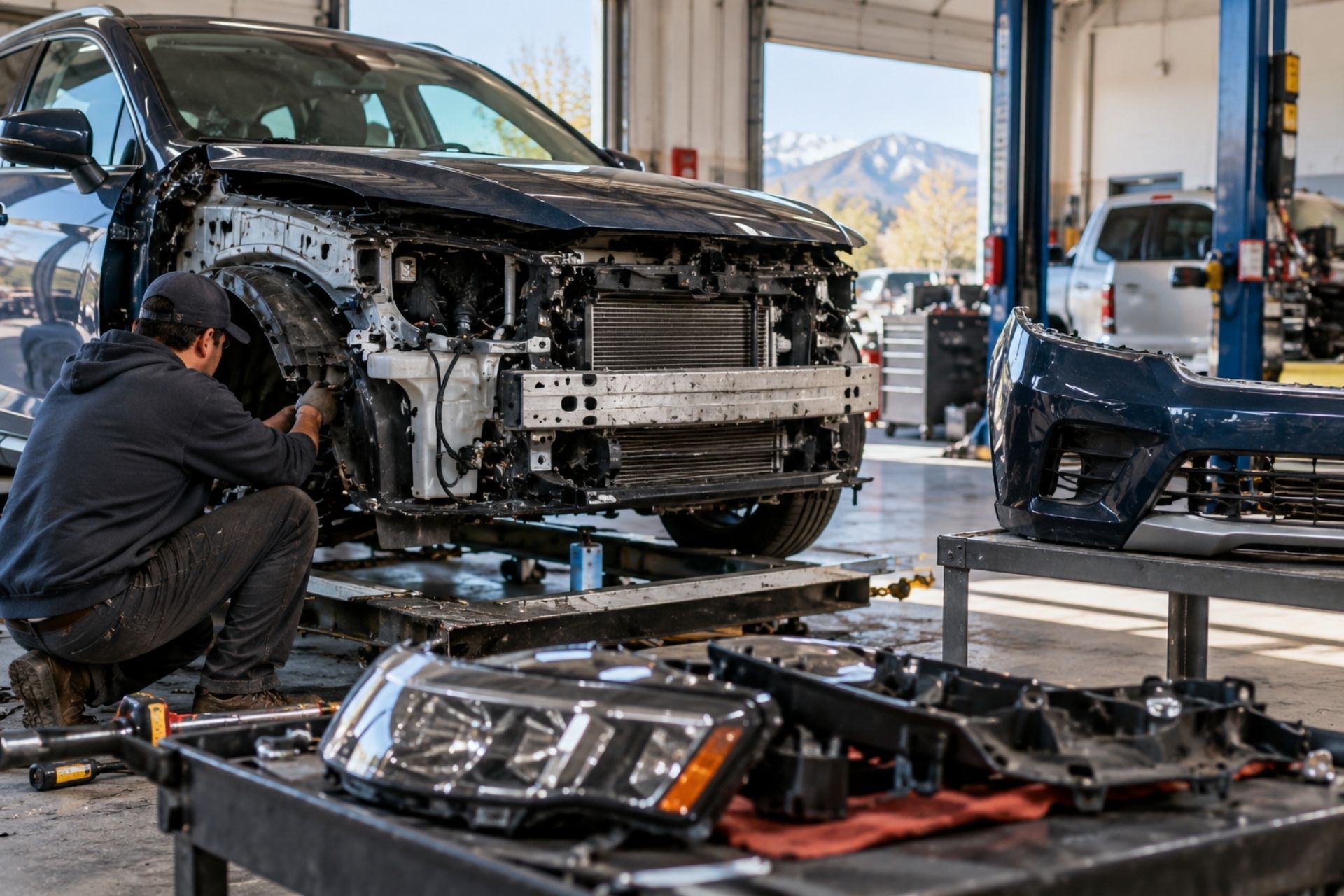
- Charger fire damages your garage and car: Homeowners pays for the structure and charger; your comprehensive auto coverage pays for the vehicle
- Car battery fire while charging damages your garage: Auto comprehensive covers the car; homeowners covers the garage
- You back into your wall-mounted charger: Collision covers the car; homeowners may cover the charger
- Charging cable kept in the car: Usually personal property under homeowners, not auto equipment coverage
If you've dropped comprehensive on an older EV to save money, a garage fire could leave the car uncovered entirely.
Comparison of Standard vs. Enhanced Coverage
A basic homeowners policy handles a lot, but the add-ons are where charger owners close real gaps. Here's how a typical setup compares to a policy built with EV charging in mind.
| Coverage Area | Standard HO-3 Policy | Enhanced Setup |
|---|---|---|
| Hardwired charger | Covered under Dwelling for named perils | Same, plus updated dwelling limit reflecting panel upgrade |
| Portable cable | Contents, often actual cash value | Replacement cost on contents |
| Utility surge / electrical failure | Often excluded | Covered with equipment breakdown endorsement |
| Liability limit | Often $300,000 | $500,000 (often <$100/yr) plus personal umbrella |
| Charger sharing for income | Usually excluded | Requires business endorsement or separate policy |
| Hail deductible | May be 1-2% of dwelling | Flat deductible where available |
The enhanced column costs more, though usually not dramatically. Equipment breakdown and a liability bump are often the best value per dollar. Compare quotes apples to apples, matching limits and deductibles exactly, or the "cheaper" option may just be thinner coverage.
Common Questions About EV Charger Insuranc
Does homeowners insurance cover my EV charger? Usually yes, for covered perils like fire, hail, and theft. Hardwired units typically fall under dwelling coverage, while portable cables fall under personal property.
Do I need to tell my insurer I installed a charger? You should. It can affect your replacement cost estimate, and disclosing it up front avoids awkward questions during a claim.
Will a DIY install void my coverage? It may not void the policy outright, but an unpermitted install makes fire claims much harder to settle. Use a licensed electrician and pull a permit.
Can I still get the federal tax credit for a home charger? No. The federal 30C credit for home chargers expired on June 30, 2026, so installations after that date don't qualify.
Does auto insurance cover my charging cable? Generally not. Cables are usually treated as personal property under your homeowners or renters policy.
Do renters need coverage for a charger? Yes. A renters policy covers your portable equipment and liability, but get your landlord's written approval before any hardwired install.
Making the Right Choice for Your Home
A home charger quietly touches your dwelling limit, your contents coverage, your liability protection, and your auto policy. Most problems we see come from homeowners who never updated their coverage after the electrician left: dwelling limits that don't reflect a new panel, liability limits too low for a shared-wall home, or a missing equipment breakdown endorsement that would have covered a surge.
Your next move is simple. Gather your permit, electrician's invoice, and charger receipt, then schedule a policy review. Confirm how your carrier classifies the charger, check your hail deductible, and ask about equipment breakdown and umbrella coverage.
The Insurance Loft can help with that review. As an independent brokerage working with carriers like Travelers, Safeco, Chubb, Nationwide, and Progressive, we compare home and auto options side by side so your charger isn't sitting in a gap between two policies. One licensed advisor, one conversation, and a lot fewer surprises the next time a storm rolls off the Front Range.
COVERAGE FOR YOUR LIFE
Personal Insurance Plans That Protect What Matters Most
From your home and car to your family and pets — we cover it all.
GET THE ANSWERS YOU NEED
Common Questions About The Insurance Loft
We believe informed clients make better coverage decisions. Here are the questions we hear most often.
What does it mean to be an independent insurance agency?
An independent insurance agency like The Insurance Loft is not tied to a single insurance company. We are licensed to work with multiple carriers — including Nationwide, Travelers, Progressive, Safeco, Chubb, and others — so we can compare options and find the best policy for your needs. When you work with a captive agent, you only see what that one company offers. When you work with us, you see the full market.
This independence also means we represent you, not the carrier. When a claim arises or your coverage needs to change, your advisor advocates for your interests — not the insurance company's bottom line. That is the core of what makes The Insurance Loft different.
Where is The Insurance Loft located and who do you serve?
The Insurance Loft is headquartered in Greenwood Village, Colorado, in the Denver Tech Center area. We serve individuals and families throughout Colorado — from the Denver Metro and Front Range to Colorado Springs, Boulder, Fort Collins, mountain communities, and beyond. Our office is conveniently located at 5990 Greenwood Plaza Blvd, Ste 270, Greenwood Village, CO 80111.
Whether you are a longtime Colorado resident or just moved to the state, The Insurance Loft can help you find the right personal insurance coverage. Our advisors understand Colorado's specific risks and regulations, and they know which carriers offer the best coverage options for your area. Call us at 800-409-9790 or schedule a call online to get started.
What types of insurance does The Insurance Loft offer?
We offer a full range of personal and commercial insurance products. On the personal side, we cover home, auto, renters, life, motorcycle, umbrella, and pet insurance. For businesses, we provide general liability, commercial property, workers compensation, professional liability, business auto, and specialty coverage for industries like construction, food and beverage, brewery, and cannabis operations.
We also offer surety bonds for businesses that require them. Our goal is to be your single resource for every insurance need — personal or commercial — throughout your life and the life of your business. If you are unsure what coverage you need, schedule a call and an advisor will walk you through your options at no cost.
What carriers does The Insurance Loft work with?
The Insurance Loft partners with more than 19 trusted insurance carriers to give clients access to a wide range of options. Our featured carrier partners include Nationwide, Travelers, Progressive, Safeco Insurance, Chubb, and Hagerty Insurance for collector vehicles. Each carrier brings different strengths, pricing structures, and coverage specialties, which is why having access to multiple companies matters.
Because we work with a diverse group of carriers, we are not pressured to place policies with any single company. Your advisor reviews your situation, identifies which carriers best match your needs, and presents your options clearly. This process consistently delivers better coverage at competitive prices compared to going directly to a single insurance company.
How does The Insurance Loft handle the claims process ?
When you need to file a claim, your dedicated Insurance Loft advisor is your first call. We provide claims support through our Member Services team and guide you through the process with your carrier. You will not be left to figure it out alone. Our advisors help you understand what your policy covers, what documentation is needed, and what to expect from the timeline.
You can also access claims support directly through our Member Services portal at theinsuranceloft.com. Our goal is to make the claims process as clear and stress-free as possible so you can focus on recovery. For urgent claims assistance, contact our Customer Care team at 800-409-9790 during business hours, Monday through Friday, 9 AM to 6 PM.
Why should I review my insurance coverage every year?
Your life changes constantly — and your insurance should change with it. A new home, a new vehicle, a renovation, a new employee, a business expansion, or a change in your income can all affect how much coverage you need. Reviewing your policy annually helps make sure you are not paying for coverage you no longer need, and that you are not underinsured in areas where your exposure has grown.
The Insurance Loft advisors proactively reach out at renewal time to review your current policies and flag anything that needs attention. Major life events like buying a home, starting a business, getting married, or having children are all good reasons to schedule an earlier review. Contact your advisor or call 800-409-9790 to set up a coverage review at any time.
INSURANCE KNOWLEDGE, MADE SIMPLE
Learn From Our Resource Center
Practical answers to real insurance questions — written by the advisors who help clients every day.

CONTACT US
Phone Number: 1-800-409-9790