

Colorado drivers face a unique set of financial risks that most people don't think about until it's too late. Between
Front Range hailstorms that can total a car in minutes and the rapid depreciation that comes with mountain driving conditions, the gap between what your vehicle is worth and what you still owe on it can be surprisingly wide. If you're leasing or financing a car in Colorado, understanding whether gap insurance makes sense for your situation could save you thousands of dollars after an accident or weather event. The state has also been unusually active on the consumer protection side of gap coverage, with the Colorado Attorney General's office
securing over $23.5 million in unearned gap fee refunds for consumers since 2019. That kind of enforcement tells you two things: gap insurance is common here, and not every provider handles it fairly. This guide breaks down what you actually need to know to make a smart decision about gap coverage for your leased or financed vehicle in Colorado.
Understanding Gap Insurance in the Colorado Market
Gap insurance pays the difference between your car's actual cash value (ACV) and the remaining balance on your loan or lease if your vehicle is totaled or stolen. That sounds straightforward, but the details matter a lot depending on where you live and how your state handles total loss claims.
Colorado's insurance market has some quirks that make gap coverage more relevant than in many other states. The combination of severe weather patterns, high vehicle prices, and aggressive depreciation creates situations where drivers can be thousands of dollars underwater on their loans within the first year of ownership.
How Gap Coverage Works with Colorado's Total Loss Laws
When your car is totaled in Colorado, your insurance company pays out the actual cash value of the vehicle at the time of the loss, not what you paid for it. Colorado law requires insurers to use fair market valuation methods when determining total loss payouts, but "fair" doesn't always mean "enough to cover your loan."
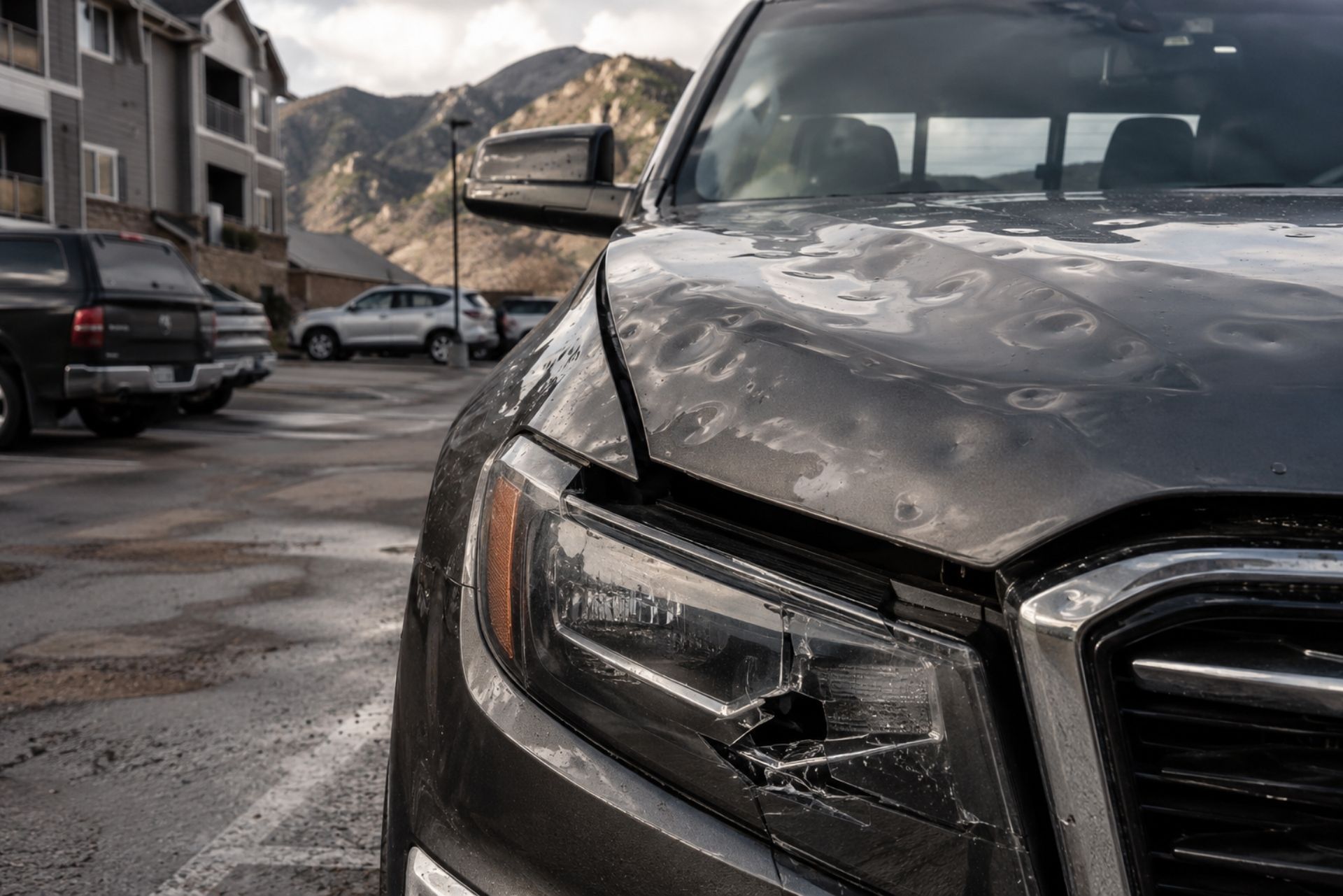
Here's a real-world scenario: you buy a $45,000 SUV with $3,000 down and finance the rest. Eighteen months later, a hailstorm in Aurora totals the vehicle. Your insurer determines the ACV is $33,000, but you still owe $39,500 on the loan. Without gap coverage, you're writing a check for $6,500 to pay off a car you can't even drive. Gap insurance covers that $6,500 difference.
The Colorado Division of Insurance has been actively working to lower costs and protect consumers in the auto insurance market, but gap coverage remains a separate product that requires individual evaluation.
The Impact of Rapid Vehicle Depreciation in High-Altitude Climates
Colorado's driving conditions accelerate depreciation in ways that catch people off guard. High-altitude UV exposure degrades paint and interiors faster. Road salt and mag chloride from winter treatments eat at undercarriages. And the sheer number of hail-damaged vehicles in the state's used car market pushes down resale values for everyone.
A vehicle driven primarily along the I-25 corridor between
Fort Collins and
Colorado Springs faces more environmental wear than the same model driven in a temperate, low-altitude state. That means your car's value drops faster, widening the gap between what you owe and what it's worth. For drivers in hail-prone areas like
Weld County or the eastern plains, the risk is even higher.

By: Brian J. Cook
Founder & Managing Partner of The Insurance Loft
Gap Insurance Requirements for Leased vs. Financed Vehicles
The answer to whether you need gap insurance depends heavily on whether you're leasing or financing, and the terms of your specific agreement.
Why Most Lease Agreements in Colorado Mandate Coverage
Most lease agreements in Colorado include gap coverage as a built-in requirement, and many lessors bundle it directly into the lease terms. This makes sense from the lessor's perspective: they own the vehicle, and they don't want to eat the loss if it's totaled.
Check your lease agreement carefully, though. Some lessors include gap coverage at no additional cost, while others charge a premium that's rolled into your monthly payment. If gap is already included, buying a separate policy wastes money. If it's not included but is required, you'll need to find coverage, and you have options beyond what the dealership offers.
One thing to keep in mind: even when gap coverage is included in a lease, it may not cover your insurance deductible. That's a separate expense that catches people off guard after a total loss.
Evaluating the Risk for Long-Term Auto Loans
Financed vehicles present a different calculation. Nobody requires you to carry gap insurance on a financed car in Colorado, but the math often argues in its favor, especially for loans stretching beyond 60 months.
The risk factors that make gap coverage worth considering for financed vehicles include:
- Loan terms of 72 months or longer
- Down payments under 20% of the vehicle's purchase price
- Rolling negative equity from a previous trade-in into your new loan
- Purchasing a model known for steep depreciation (some sedans lose 40% of their value in the first two years)
If you put 25% down on a 48-month loan for a Toyota Tacoma (which holds value well in Colorado's market), gap insurance probably isn't worth the cost. But if you financed a new sedan with zero down on a 72-month note, you could be underwater for the first three to four years of ownership.
You have two main paths for purchasing gap coverage, and the price difference can be significant.
Comparison Table: Dealership Gap vs. Insurance Carrier Add-ons
| Feature | Dealership Gap Waiver | Insurance Carrier Add-on |
|---|---|---|
| Typical Cost | $500-$900 one-time fee | $20-$60 per year |
| Payment Structure | Rolled into loan (you pay interest on it) | Added to monthly premium |
| Cancellation | Refund may be partial or prorated | Cancel anytime, effective immediately |
| Deductible Coverage | Sometimes included (up to $1,000) | Rarely included |
| Portability | Tied to that specific vehicle/loan | Tied to your auto policy |
| Portability | Tied to that specific vehicle/loan | Tied to your auto policy |
The cost difference is striking. A dealership gap waiver at $700, financed over 72 months at 6.5% APR, actually costs you closer to $850 by the time you pay it off. An insurance carrier add-on at $40 per year costs $240 over six years, and you can cancel it as soon as your loan balance drops below your vehicle's value.
At The Insurance Loft, we regularly help Colorado drivers compare gap coverage options across multiple carriers. Because we work with companies like Nationwide, Travelers, and Progressive, we can show you which insurer offers the best gap add-on rate for your specific situation, often saving hundreds compared to the dealership price.
When to Skip Gap Insurance to Save Money
Gap insurance isn't always necessary, and paying for coverage you don't need is just as wasteful as going without coverage you do need.
Calculating Your Loan-to-Value Ratio
The simplest way to determine whether gap coverage makes sense is to calculate your loan-to-value (LTV) ratio. Divide your current loan balance by your vehicle's current market value (check KBB or NADA guides for a realistic estimate).
- LTV above 100%: You're underwater, and gap insurance provides real protection
- LTV between 90-100%: You're in a gray zone where a large deductible could leave you short
- LTV below 90%: Your standard auto insurance payout should cover your remaining loan balance
Recalculate this every 12 months. Many drivers buy gap coverage at the dealership and forget about it for years, continuing to pay even after their LTV drops well below 90%. If you purchased gap through your auto insurer, a quick call to your agent can remove it from your policy when the numbers no longer justify it. This is one of those annual policy review tasks that can save you real money.
If you're working with an independent agency like The Insurance Loft, your advisor can run this calculation during your annual review and recommend dropping gap coverage the moment it stops making financial sense.
Common Questions About Colorado Gap Coverage
FAQ: Can I cancel gap insurance if I pay off my loan early?
Yes. If you purchased a gap waiver through a dealership, Colorado law entitles you to a prorated refund of the unused portion. The Colorado AG's office has aggressively pursued dealers and administrators who failed to provide these refunds. If you added gap through your auto insurance carrier, you can simply remove it from your policy at any time.
FAQ: Does gap insurance cover my deductible in Colorado?
Most gap policies from insurance carriers do not cover your deductible. Some dealership gap waivers include deductible coverage up to $500 or $1,000, but read the fine print. If your deductible is $1,000 and your gap waiver doesn't cover it, you'll still owe that amount out of pocket after a total loss.
FAQ: Is gap insurance required by Colorado state law?
No. Colorado does not require gap insurance by law. Your lender or lessor may require it as a condition of your financing agreement, but that's a contractual requirement, not a state mandate. Colorado does have specific regulations governing how gap products are sold and refunded, which provides more consumer protection than many other states offer.
FAQ: How much does gap insurance typically cost per month?
Through an insurance carrier, gap coverage in Colorado
typically runs between $20 and $60 per year, which works out to roughly $2-$5 per month. Dealership gap waivers cost more upfront ($500-$900) but are a one-time purchase. The insurance carrier route is almost always cheaper, especially if you plan to cancel once your LTV drops.
Making the Right Choice for Your Wallet
Gap insurance in Colorado is worth it for most people who lease or carry long-term auto financing, particularly if you put less than 20% down or drive in hail-prone areas along the Front Range. The math is simple: if your loan balance exceeds your car's value, gap coverage protects you from paying off a vehicle you no longer have.
The smartest approach is to buy gap coverage through your auto insurance carrier rather than the dealership, review your LTV ratio annually, and cancel the coverage once your equity catches up. This strategy gives you protection when you need it and saves money when you don't.
If you're unsure whether your current gap coverage is a good deal or whether you need it at all, reach out to The Insurance Loft. As an independent brokerage based in Greenwood Village, we compare options across multiple carriers and give you a straight answer, not a sales pitch. Your licensed advisor can review your loan terms, assess your vehicle's depreciation curve, and tell you exactly when gap coverage makes sense and when it's time to drop it.
ABOUT THE AUTHOR:
Brian J. Cook
I'm Brian J. Cook, co-founder and Managing Partner of The Insurance Loft, an independent insurance agency headquartered in Greenwood Village, Colorado. With a client-first approach to personal insurance, I help Colorado homeowners, drivers, and families find the right coverage — without the limitations of working with a single-carrier agent.
COVERAGE FOR YOUR LIFE
Personal Insurance Plans That Protect What Matters Most
From your home and car to your family and pets — we cover it all.
GET THE ANSWERS YOU NEED
Common Questions About The Insurance Loft
We believe informed clients make better coverage decisions. Here are the questions we hear most often.
What does it mean to be an independent insurance agency?
An independent insurance agency like The Insurance Loft is not tied to a single insurance company. We are licensed to work with multiple carriers — including Nationwide, Travelers, Progressive, Safeco, Chubb, and others — so we can compare options and find the best policy for your needs. When you work with a captive agent, you only see what that one company offers. When you work with us, you see the full market.
This independence also means we represent you, not the carrier. When a claim arises or your coverage needs to change, your advisor advocates for your interests — not the insurance company's bottom line. That is the core of what makes The Insurance Loft different.
Where is The Insurance Loft located and who do you serve?
The Insurance Loft is headquartered in Greenwood Village, Colorado, in the Denver Tech Center area. We serve individuals and families throughout Colorado — from the Denver Metro and Front Range to Colorado Springs, Boulder, Fort Collins, mountain communities, and beyond. Our office is conveniently located at 5990 Greenwood Plaza Blvd, Ste 270, Greenwood Village, CO 80111.
Whether you are a longtime Colorado resident or just moved to the state, The Insurance Loft can help you find the right personal insurance coverage. Our advisors understand Colorado's specific risks and regulations, and they know which carriers offer the best coverage options for your area. Call us at 800-409-9790 or schedule a call online to get started.
What types of insurance does The Insurance Loft offer?
We offer a full range of personal and commercial insurance products. On the personal side, we cover home, auto, renters, life, motorcycle, umbrella, and pet insurance. For businesses, we provide general liability, commercial property, workers compensation, professional liability, business auto, and specialty coverage for industries like construction, food and beverage, brewery, and cannabis operations.
We also offer surety bonds for businesses that require them. Our goal is to be your single resource for every insurance need — personal or commercial — throughout your life and the life of your business. If you are unsure what coverage you need, schedule a call and an advisor will walk you through your options at no cost.
What carriers does The Insurance Loft work with?
The Insurance Loft partners with more than 19 trusted insurance carriers to give clients access to a wide range of options. Our featured carrier partners include Nationwide, Travelers, Progressive, Safeco Insurance, Chubb, and Hagerty Insurance for collector vehicles. Each carrier brings different strengths, pricing structures, and coverage specialties, which is why having access to multiple companies matters.
Because we work with a diverse group of carriers, we are not pressured to place policies with any single company. Your advisor reviews your situation, identifies which carriers best match your needs, and presents your options clearly. This process consistently delivers better coverage at competitive prices compared to going directly to a single insurance company.
How does The Insurance Loft handle the claims process ?
When you need to file a claim, your dedicated Insurance Loft advisor is your first call. We provide claims support through our Member Services team and guide you through the process with your carrier. You will not be left to figure it out alone. Our advisors help you understand what your policy covers, what documentation is needed, and what to expect from the timeline.
You can also access claims support directly through our Member Services portal at theinsuranceloft.com. Our goal is to make the claims process as clear and stress-free as possible so you can focus on recovery. For urgent claims assistance, contact our Customer Care team at 800-409-9790 during business hours, Monday through Friday, 9 AM to 6 PM.
Why should I review my insurance coverage every year?
Your life changes constantly — and your insurance should change with it. A new home, a new vehicle, a renovation, a new employee, a business expansion, or a change in your income can all affect how much coverage you need. Reviewing your policy annually helps make sure you are not paying for coverage you no longer need, and that you are not underinsured in areas where your exposure has grown.
The Insurance Loft advisors proactively reach out at renewal time to review your current policies and flag anything that needs attention. Major life events like buying a home, starting a business, getting married, or having children are all good reasons to schedule an earlier review. Contact your advisor or call 800-409-9790 to set up a coverage review at any time.
INSURANCE KNOWLEDGE, MADE SIMPLE
Learn From Our Resource Center
Practical answers to real insurance questions — written by the advisors who help clients every day.

CONTACT US
Phone Number: 1-800-409-9790