
See How We're Different
Call Us: 1-800-409-9790
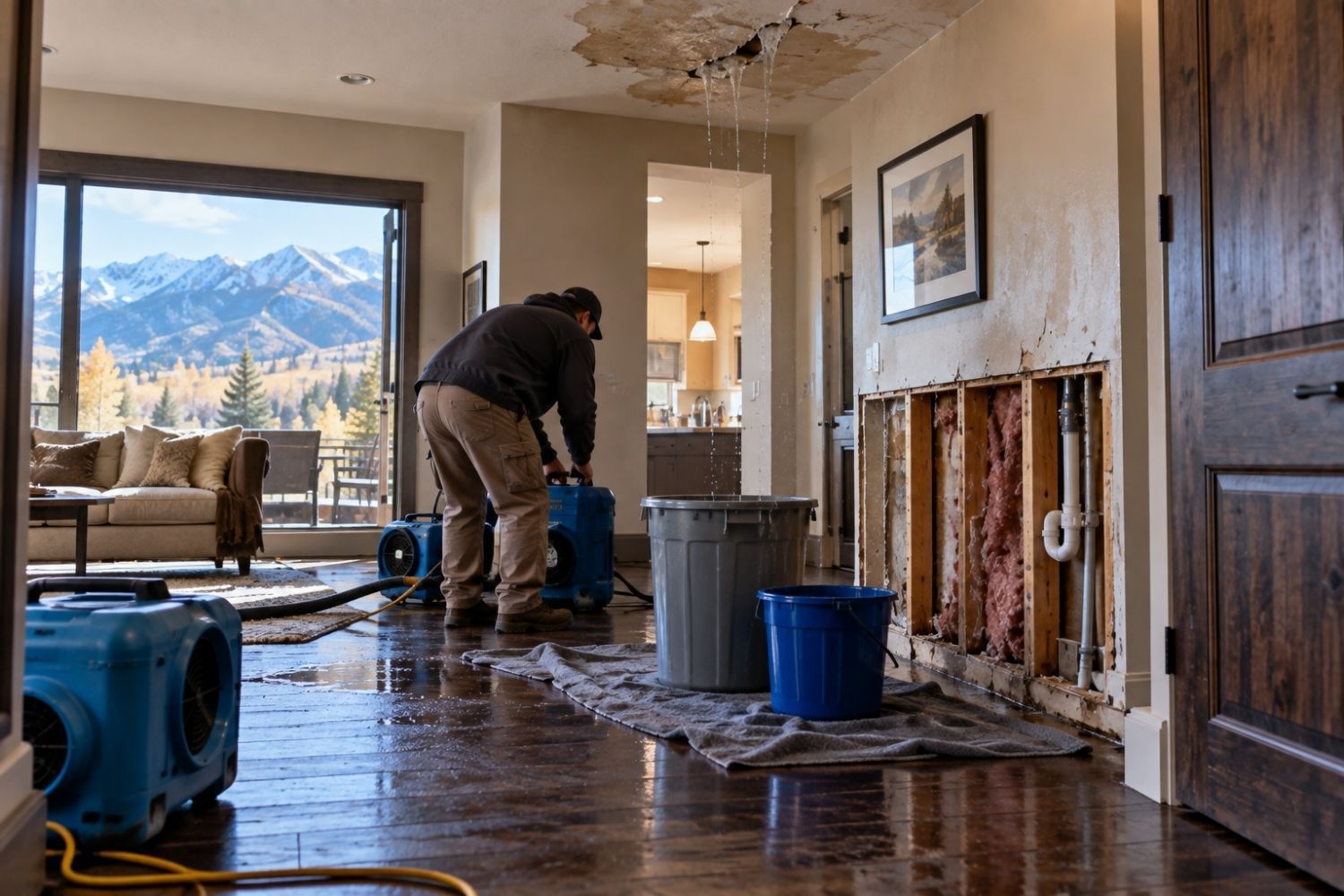
Mold after water damage is one of the most misunderstood areas in homeowners insurance. A burst pipe floods your basement on a Tuesday, and by Friday you're staring at dark spots creeping up the drywall. Your first instinct is to call your insurance company, but the answer you get depends on a tangle of policy language, timing, and how well you documented the original loss. Coverage triggers, sublimits, exclusions, testing protocols, and remediation costs all interact in ways that catch homeowners off guard, often at the worst possible moment.
Here's what makes this topic so frustrating: mold itself isn't always excluded. But it's almost never covered the way you'd expect. Most standard homeowners policies treat mold as a secondary consequence of water damage, not as a standalone peril. That distinction matters enormously when you're filing a claim. The difference between a $25,000 payout and a denial letter often comes down to whether the water event was "sudden and accidental" or something that seeped in over weeks.
Colorado homeowners face particular pressure here. Front Range hailstorms can drive water through compromised roofing, and older homes along the I-25 corridor sometimes have plumbing that fails without warning. If you own property in this state, understanding how mold coverage works isn't optional. It's financial self-defense.
We see these claims regularly at The Insurance Loft, and the pattern is consistent: homeowners who understand their policy language before a loss occurs recover faster and more completely than those who don't.
Understanding Coverage Triggers for Mold Damage
A covered peril might be a burst pipe, an appliance malfunction, or storm damage that allows water intrusion. If the water event qualifies, the resulting mold damage often qualifies too, subject to your policy's sublimits and conditions. But if the water source is something your policy excludes, like flooding from a natural disaster or long-term maintenance neglect, the mold claim dies on arrival.
The Resulting Loss Rule
Many homeowners policies include a "resulting loss" provision. This means that even if the original cause of damage is excluded, the consequences of that damage may still be covered. For example, if faulty workmanship (excluded) leads to water intrusion that causes mold, the mold damage itself might be covered as a resulting loss.
The catch is that this rule varies by state and by carrier. Some insurers interpret it narrowly, covering only the physical damage from water but excluding the mold that follows. Others take a broader view. Colorado courts have generally been favorable to policyholders on resulting loss claims, but you can't assume your carrier will agree without a fight.
Sudden and Accidental vs. Gradual Seepage
Policy Limits and Common Exclusions
Even when mold is covered, your policy almost certainly caps how much it will pay. These caps, called sublimits, are often surprisingly low relative to actual remediation costs.
Standard Sublimits for Fungi and Bacteria
Most standard HO-3 policies include a sublimit for mold, fungi, and bacteria that ranges from $5,000 to $10,000. That might sound reasonable until you realize that professional mold remediation for a moderate infestation typically costs $10,000 to $30,000, and severe cases can run well past $50,000. The sublimit applies to the total mold-related expenses: testing, remediation, and any additional living expenses tied to the mold, not just the cleanup itself.
Comparing Standard vs. Enhanced Endorsements
Some carriers offer mold endorsements that raise sublimits to $25,000, $50,000, or even higher. These endorsements typically add $50 to $500 annually to your premium, depending on the coverage amount and your home's risk profile. For Colorado homeowners, especially those with finished basements or older plumbing, the math usually favors buying the endorsement. One moderate mold event will cost more than a decade of endorsement premiums.
Comparison: Basic Policy vs. Mold Endorsement
| Feature | Standard HO-3 Policy | Mold Endorsement |
|---|---|---|
| Mold sublimit | $5,000 - $10,000 | $25,000 - $50,000+ |
| Testing coverage | Often excluded or capped | Typically included |
| Remediation scope | Limited to sublimit | Higher cap, broader scope |
| Additional living expenses | Shared with sublimit | May have separate allocation |
| Annual cost | Included in base premium | $50 - $500 additional |
| Best for | Low-risk homes, newer construction | Older homes, finished basements, high-value properties |
At The Insurance Loft, we compare mold endorsement options across carriers like Travelers, Safeco, and Chubb because the pricing and terms vary significantly. A $25,000 endorsement from one carrier might cost twice what another charges for the same limit.
When and How to File a Mold Claim
Timing is everything with mold claims. Most policies require you to report water damage "promptly," and some specify timeframes as short as 48 to 72 hours. If you delay reporting the original water event and mold develops in the interim, your carrier may argue the mold resulted from your failure to mitigate, not from the covered peril.
Document everything from the moment you discover water damage. Photograph the affected areas, save any communication with plumbers or contractors, and contact your insurance company the same day if possible. Mold can begin growing within 24 to 48 hours of water exposure, so the clock starts ticking fast. Your duty to mitigate means you should begin drying efforts immediately, even before an adjuster arrives. Keep receipts for fans, dehumidifiers, and any emergency services you hire.
The Protocol for Testing and Remediation
Professional mold remediation isn't a DIY project, and insurers know it. A proper remediation follows established protocols, and cutting corners can result in claim denials or incomplete removal that leads to regrowth.
Industrial Hygienists vs. Remediation Contractors
There's an important distinction here that most homeowners miss. An industrial hygienist (IH) assesses the mold problem: they identify the type, extent, and source of contamination. A remediation contractor does the physical removal. Best practice, and what most insurers prefer, is to keep these roles separate. Having the same company test and remediate creates a conflict of interest.
The IICRC S520 standard, which was cited in the 2026 National Defense Authorization Act for military housing guidelines, is the industry benchmark for mold remediation. Insist that any contractor you hire follows this standard, and get it in writing.
Post-Remediation Verification (PRV) Testing
After remediation is complete, a PRV test confirms that mold levels have returned to normal. This test should be conducted by an independent party, not the remediation company. PRV testing typically costs $300 to $700, and it's money well spent. Without it, you have no documentation proving the remediation was successful, which matters both for your insurance claim and for future resale.
Remediation costs themselves vary widely based on the scope of the problem, from a few thousand dollars for a small area to $30,000 or more for extensive contamination involving structural materials.
Common Questions About Mold and Insurance
Does homeowners insurance cover mold from a roof leak after a hailstorm? Usually yes, if the hailstorm is a covered peril and you reported the damage promptly. The mold would be treated as a resulting loss from wind or hail damage.
Can my insurer deny a mold claim if I didn't know about the water damage? Yes. Policies exclude gradual damage regardless of whether you knew about it. Ignorance of a slow leak doesn't convert it into a "sudden and accidental" event.
How fast does mold grow after water damage? Mold can colonize within 24 to 48 hours in warm, humid conditions. Visible growth often appears within 3 to 7 days.
Is black mold treated differently by insurance companies? No. Policies don't distinguish between mold species. The coverage question is always about the water source, not the mold type.
Should I hire a public adjuster for a mold claim? For claims exceeding your sublimit or involving disputes, a public adjuster can be worth the fee, typically 10% to 15% of the settlement. For straightforward claims within sublimits, it's usually unnecessary.
Will filing a mold claim raise my premiums? It can. Water and mold claims are among the most common reasons for premium increases or non-renewal. Consider this before filing small claims that fall near your deductible.
Steps to Take Within the First 48 Hours
The first two days after discovering water damage determine whether your mold situation stays manageable or spirals. Here's what to prioritize:
- Stop the water source if possible and safe to do so
- Contact your insurance company to report the loss
- Begin drying: open windows, run fans, deploy dehumidifiers
- Photograph and video all affected areas before cleanup begins
- Save damaged materials if your adjuster hasn't inspected yet
- Call a water mitigation company for professional extraction
Don't wait for an adjuster before starting mitigation. Your policy requires you to prevent further damage, and drying efforts fall squarely within that duty.
How Mold Affects Your Home's Market Value
Discovery of mold can reduce a home's resale value by 20% to 37% if it's not professionally remediated and documented. That's not a typo. On a $500,000 Colorado home, that's a potential loss of $100,000 to $185,000 in value.
Buyers and their inspectors are looking for mold history, and disclosure laws in Colorado require you to report known material defects. Professional remediation with proper PRV documentation is the only way to protect your equity. Skipping the paperwork or handling it yourself might save money upfront, but it creates a disclosure liability that follows the property.
What Colorado Homeowners Should Know
Colorado's semi-arid climate might seem like it would reduce mold risk, but the opposite is often true in specific scenarios. Finished basements, common throughout the Front Range, trap moisture from foundation seepage. Snowmelt in spring can overwhelm older drainage systems. And the state's rapid temperature swings create condensation problems that many homeowners don't notice until mold is established.
The restoration industry has seen steady growth in mold-related claims across mountain and metro areas alike. Colorado doesn't have specific mold remediation licensing requirements, which means the burden falls on you to verify contractor credentials and ensure IICRC certification.
Protecting Your Property Value Long-Term
Mold after water damage is a coverage, testing, and remediation challenge that rewards preparation. The homeowners who come through these situations best are the ones who understood their policy limits before the loss, documented everything from day one, and hired qualified professionals for both assessment and cleanup.
Review your current policy's mold sublimit. If it's sitting at $5,000 or $10,000, seriously consider an enhanced endorsement, especially if your home has a finished basement, is older than 20 years, or has any history of water issues. The cost of the endorsement is trivial compared to a single remediation project.
If you're unsure what your policy actually covers, that's a sign it's time for a review. At The Insurance Loft, we walk clients through their mold and water damage provisions line by line, comparing options across multiple carriers to find the right balance of coverage and cost. A 30-minute conversation now can save you tens of thousands later. Reach out to our team for a policy review before the next storm season hits.
Your Next Move
Don't wait for water damage to find out what your policy covers. Pull out your declarations page, check your mold sublimit, and ask your agent hard questions about resulting loss provisions and endorsement options. The best time to fix a coverage gap is before you need the coverage.
Recent Posts

Let’s work together
Call Us
800-409-9790
Email Address
info@theinsuranceloft.com
Address Business
123 High St London, United Kingdom