
See How We're Different
Call Us: 1-800-409-9790
Colorado homeowners have watched their insurance bills climb with alarming speed over the past several years. If your most recent renewal notice made you wince, you're not alone. Homeowners insurance rates in Colorado have surged by roughly 100% between 2018 and 2024, a pace that far outstrips the national average. That trend hasn't reversed in 2026, though new state-level policy efforts are starting to offer some hope.
What drives your rate in Colorado isn't a mystery, but the combination of factors here is unlike most other states. Wildfire exposure, severe hail corridors, aging housing stock, and a booming population pressing into high-risk areas all play a role. Understanding these variables is the first step toward controlling your costs, and this guide breaks down exactly where Colorado stands right now, what's pushing premiums up, and what you can actually do about it.
Whether you own a condo in Denver, a ranch home in Weld County, or a mountain property near Estes Park, the pricing dynamics affect you differently. The good news: there are real, concrete strategies to bring your bill down without gutting your coverage.
Average Costs and Market Trends for 2026
Current State Averages and National Comparisons
The average annual homeowners insurance premium in Colorado sits around $3,200 to $3,800 in 2026 for a standard HO-3 policy on a home valued near $450,000. That's well above the national average, which hovers closer to $2,300 per year. Colorado consistently ranks among the top 10 most expensive states for home insurance, a position that would have surprised most people a decade ago.
The gap between Colorado and the national average has widened since 2020. Carriers like State Farm, USAA, and Travelers price Colorado policies with significant risk loading for weather-related claims. Some zip codes along the Front Range see premiums 30% to 50% higher than the state average, particularly in areas with documented hail frequency.
Why Colorado Rates Are Rising Above the National Average
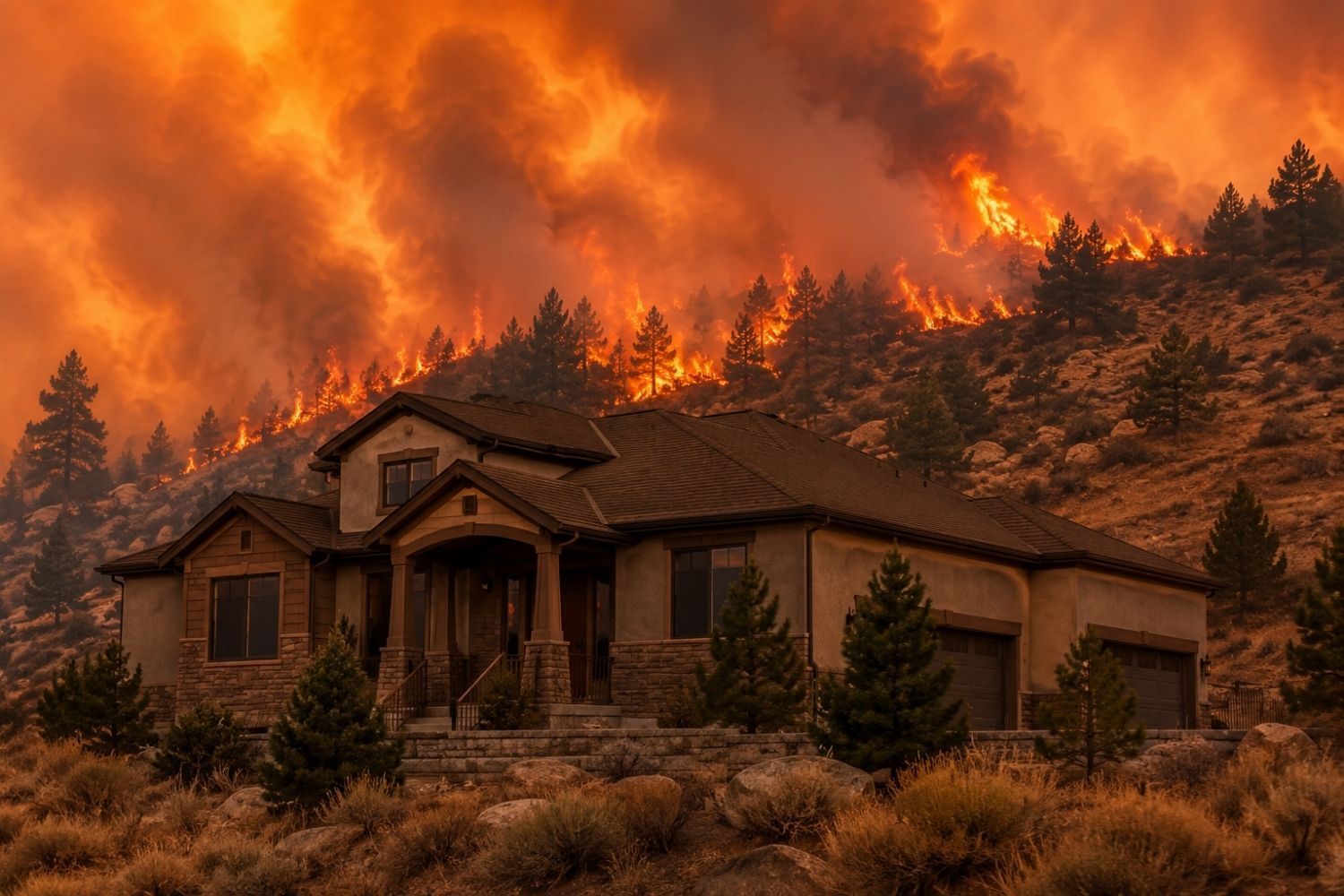
Several forces are converging. First, catastrophic wildfire losses from events like the Marshall Fire in 2021 forced carriers to recalibrate their risk models statewide. Some insurers have pulled out of high-risk mountain communities entirely, reducing competition and pushing prices up for the remaining options.
Second, Colorado's hail season has become more destructive. Annual insured hail losses regularly exceed $2 billion statewide, and carriers pass those costs directly to policyholders. Governor Polis has announced a roadmap to reduce homeowners insurance costs by up to $800 per year, but the impact of those measures will take time to materialize. The state's Division of Insurance has also taken further action to lower rates, including increased scrutiny of carrier rate filings and encouraging mitigation-based discounts.
Key Factors Influencing Your Colorado Premium
Wildfire Risk and High-Altitude Considerations
If your property sits in or near a wildland-urban interface, your premium reflects that exposure. Insurers use wildfire risk scores that account for vegetation density, slope, access roads, and distance from fire stations. A home in the foothills west of Boulder or in the mountains near Breckenridge will cost significantly more to insure than an identical home on the eastern plains.
Some carriers have stopped writing new policies in fire-prone zip codes altogether. If you're in one of these areas, working with an independent brokerage like The Insurance Loft gives you access to multiple carriers, including surplus lines markets, that still write coverage where others won't.
Severe Weather: Hail and Wind Damage Impacts
Colorado's Front Range corridor, stretching from Colorado Springs through Denver up to Fort Collins, is one of the most hail-prone regions in the country. Weld County and parts of Adams County see some of the highest claim frequencies. A single major hailstorm can generate thousands of insurance claims in a matter of hours, and those losses ripple through everyone's premiums the following year.
Wind damage compounds the problem. Chinook winds along the Front Range regularly gust above 80 mph, tearing off shingles and damaging siding. Carriers price this risk aggressively, and homes with older roofs or lightweight construction materials pay the most.
Home Age and Construction Materials
A home built in the 1970s with a wood-shake roof is a fundamentally different risk than a 2022 build with impact-resistant shingles and fire-resistant siding. Carriers evaluate construction type, roof age, electrical and plumbing systems, and foundation materials when setting your rate.
Homes with updated electrical panels, modern plumbing, and Class 4 impact-resistant roofing typically qualify for discounts ranging from 10% to 30%. Your credit-based insurance score also plays a role in Colorado. Carriers use it as a predictor of claim likelihood, and a strong score can meaningfully reduce your premium.
Comparing Coverage Levels: Basic vs. Comprehensive
Comparison Chart: HO-3 vs. HO-5 Policy Benefits
Choosing between an HO-3 and HO-5 policy is one of the most consequential decisions you'll make. Here's how they compare:
| Feature | HO-3 (Special Form) | HO-5 (Comprehensive Form) |
|---|---|---|
| Dwelling Coverage | Open perils (all risks unless excluded) | Open perils (all risks unless excluded) |
| Personal Property | Named perils only (16 specific causes) | Open perils (broader protection) |
| Claim Settlement | Actual cash value or replacement cost | Replacement cost standard |
| Typical Premium | $3,200 - $3,800/year (CO avg.) | $3,800 - $4,600/year (CO avg.) |
| Best For | Budget-conscious homeowners | Homeowners wanting fewer coverage gaps |
| Accidental Damage to Belongings | Not covered | Typically covered |
The HO-3 is the most common policy in Colorado, but the HO-5 eliminates a coverage gap that catches many homeowners off guard: personal property is covered for open perils rather than just a limited list. If you accidentally spill paint on expensive carpet or your child damages a laptop, an HO-5 typically covers it. An HO-3 would not.
For homes valued above $750,000 or those with significant personal property, carriers like Chubb and Safeco offer HO-5 policies with enhanced features. The Insurance Loft can compare both policy types across multiple carriers to show you the actual dollar difference, which is often smaller than people expect.
How to Lower Your Home Insurance Bill
Smart Home and Mitigation Discounts
Insurers are increasingly rewarding homeowners who invest in loss prevention. Installing a monitored alarm system, water leak sensors, or a smart smoke detection system can earn you 5% to 15% off your premium. Some carriers offer specific discounts for homes with whole-house surge protectors, which matter in a state where lightning strikes are common.
Wildfire mitigation measures carry real weight too. Creating defensible space around your property, using fire-resistant landscaping, and installing ember-resistant vents can qualify you for discounts through Colorado's wildfire mitigation programs. The state has been pushing new initiatives aimed at cutting insurance costs by incentivizing these improvements, and some carriers now offer specific mitigation credits.
Adjusting Deductibles to Balance Monthly Costs
Raising your deductible from $1,000 to $2,500 can reduce your annual premium by 15% to 25%. That's real money: potentially $500 to $900 per year on a typical Colorado policy. The tradeoff is straightforward: you pay more out of pocket when you file a claim.
For many homeowners, a higher deductible makes financial sense if you have an emergency fund to cover the gap. Bundling your home and auto policies through the same carrier typically saves another 10% to 20%. Run the numbers on both strategies before your next renewal. An annual policy review, comparing quotes apples to apples with matching coverage limits and deductibles, is the single most effective way to keep your costs in check
Common Questions About Colorado Home Coverage
Does standard insurance cover wildfire damage?
Yes. Standard HO-3 and HO-5 policies cover wildfire damage to your dwelling and personal property. They also typically include additional living expenses if you're displaced. That said, some carriers in high-risk zones may impose sublimits or require supplemental coverage, so read your declarations page carefully.
Why is my premium higher in the Front Range?
The Front Range sits in one of the country's most active hail corridors. Claim frequency in counties like Weld, Adams, and El Paso drives higher base rates. Proximity to wildland-urban interface areas west of the I-25 corridor adds another layer of risk that carriers price into your premium.
Is flood insurance required in Colorado?
Standard homeowners policies do not cover flood damage. If your property is in a FEMA-designated flood zone, your mortgage lender will require a separate flood policy through the National Flood Insurance Program or a private carrier. Even outside designated zones, flash flood risk along Colorado's many creek corridors makes flood coverage worth considering.
How do I get coverage if I'm in a high-risk zone?
Start with an independent agency that works with multiple carriers. Some standard carriers won't write policies in certain mountain or wildfire-prone zip codes, but surplus lines carriers and specialty markets often will. The Insurance Loft regularly places coverage for homeowners in areas where other carriers have pulled back, connecting clients with options they wouldn't find on their own.
Will a new roof lower my insurance rate?
Almost always, yes. Replacing an aging roof with Class 4 impact-resistant shingles can reduce your premium by 15% to 30% in Colorado. Some carriers require roof inspections before offering their best rates, and a roof older than 15 years may trigger actual cash value rather than replacement cost coverage on that portion of your policy.
The Bottom Line on Protecting Your Property
Colorado's homeowners insurance market in 2026 is expensive, but it's not unmanageable. The costs are driven by real, measurable risks: hail, wildfire, wind, and aging homes. Understanding what drives your rate gives you the power to take specific actions, whether that's upgrading your roof, installing mitigation features, raising your deductible, or simply shopping your policy across multiple carriers each year.
Don't wait for your renewal notice to start comparing options. Reach out to a licensed advisor at The Insurance Loft who can pull quotes from carriers like Nationwide, Travelers, Progressive, Safeco, and Chubb, all in one conversation. You'll see exactly where you stand and where you can save. One call, real answers, no pressure: that's how insurance should work.
Recent Posts


Let’s work together
Call Us
800-409-9790
Email Address
info@theinsuranceloft.com
Address Business
123 High St London, United Kingdom